
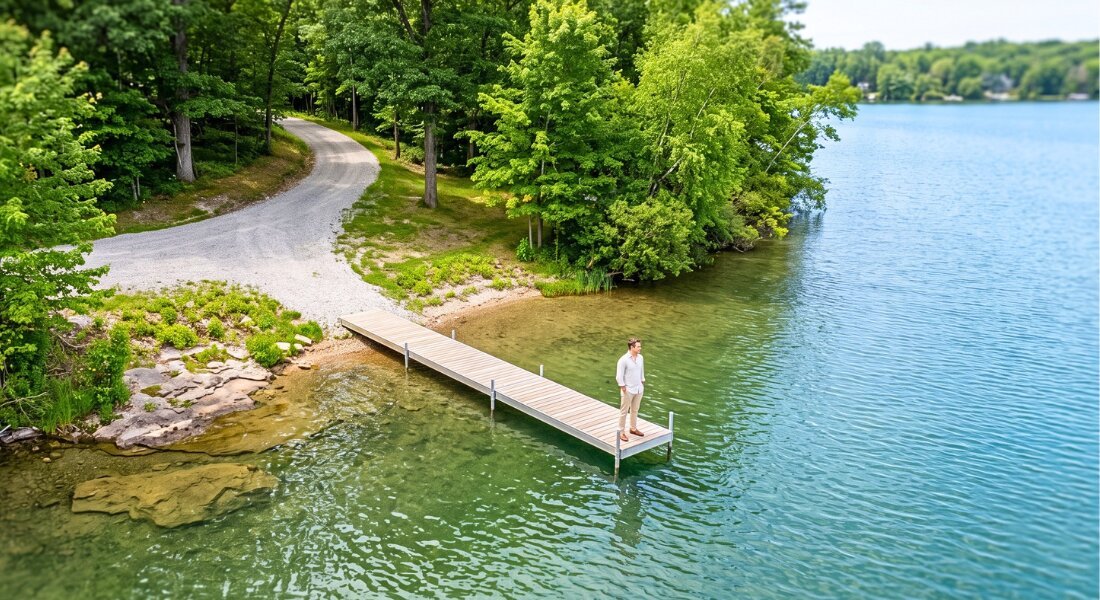
Most Michigan lake property buyers see their purchase once before making an offer. That first showing is almost always scheduled in the summer, when the property looks its best. The water is full, the shoreline is green, the dock is in, and the approach looks clean. Everything about the visit confirms what they hoped to find.
Seeing a lake home at its best is definitely worth your time, but it doesn’t provide the full picture of what you’re buying. A July visit captures one season of a Michigan lake property that can look very different throughout the year. Property conditions in spring, winter, and fall are not minor details. Taking the time to learn about them can help you be more confident about the purchase.
A summer showing can make a Michigan lake property look almost perfect. But July cannot reveal how the property responds throughout the other seasons. Spring water levels, winter roads, and changing lake conditions can reshape ownership expectations. Understanding those seasonal differences helps buyers approach their purchase with greater confidence.
The Lake Bottom Changes More Than You Think
Some buyers know exactly what they need from a lake bottom. A sandy bottom tends to be non-negotiable for anyone who wants to wade in comfortably. Mucky bottoms aren’t always visible from above the surface, which is worth keeping in mind. They’re hard to spot through ice or post-snowmelt murkiness, so seeing more than one season tells the fuller story.
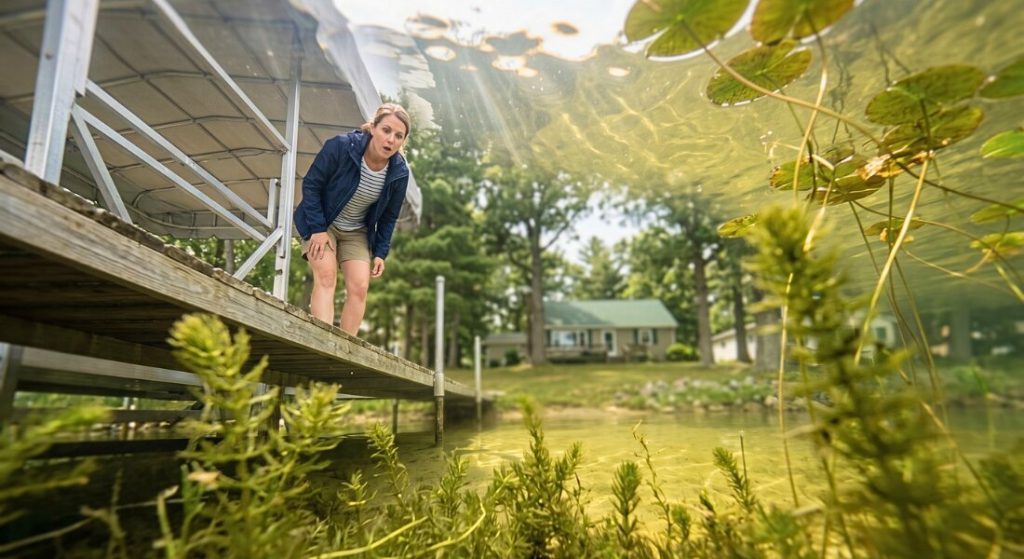
By July, the water has cleared, and the approach looks fine, which is exactly why a summer showing can be misleading. What it may not fully show is how that same approach shifted a bit over winter, when conditions were very different. It also won’t reveal whether vegetation took hold in a shallower channel during a dry fall the year before.
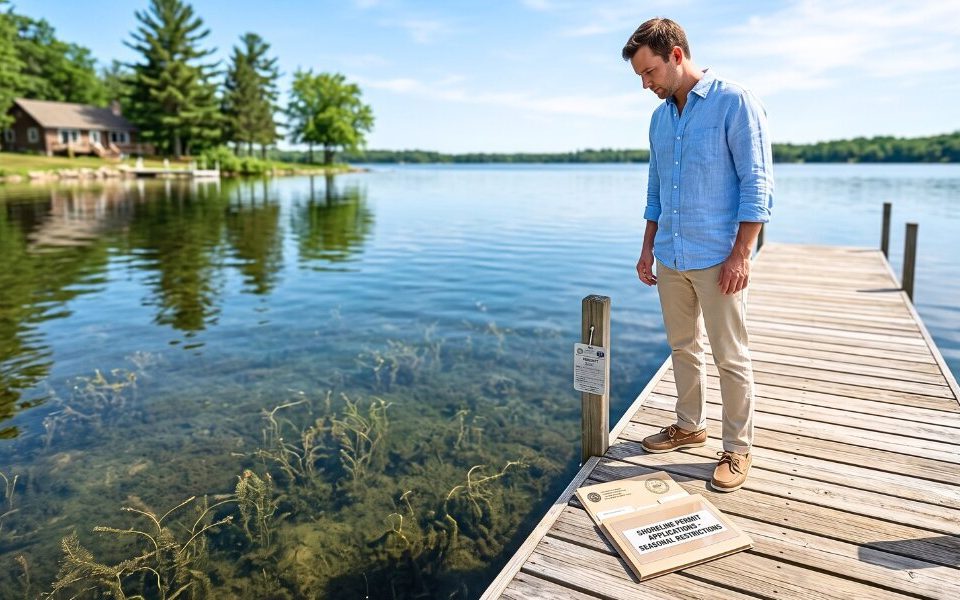
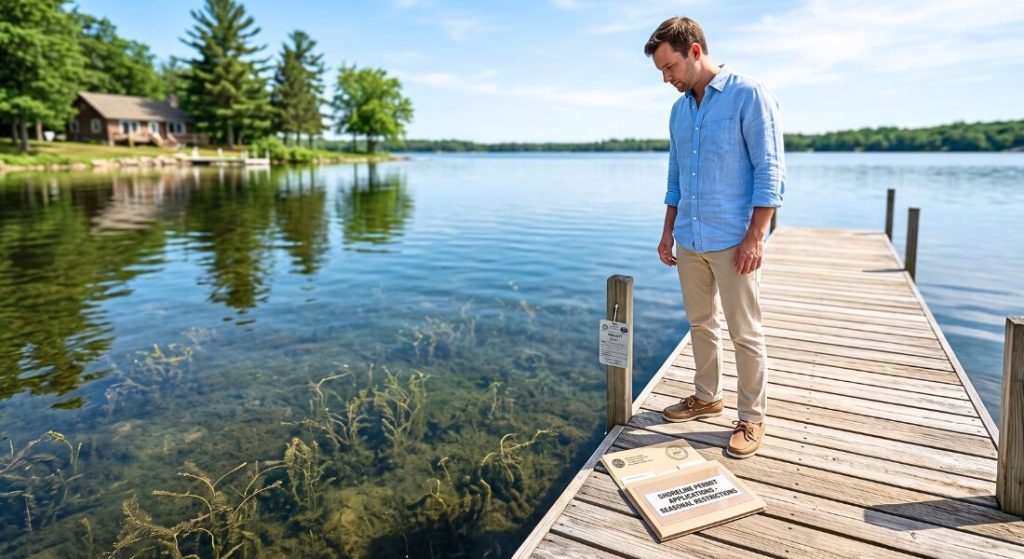
Weeds that were cut before a showing are not the same as weeds that were treated. A property can look clean at the dock in July and still return a tangle of growth by the following summer. This often happens when invasive species were managed cosmetically rather than chemically the year before.
Any chemical treatment on a Michigan inland lake requires a permit issued through the Michigan Department of Environment, Great Lakes, and Energy (EGLE). It also requires approved timing and coordination with the state throughout the process. Buyers who assume they can clear a weedy bottom on their own schedule are often surprised.
Species like Eurasian watermilfoil can regenerate aggressively within a single season after mechanical cutting. If a seller cannot produce treatment records, mechanical management is the more likely explanation.
Understanding Spring Thaw on a Lake Property
The spring melt is a recurring reality of lake property ownership in Southwest Michigan. After a hard winter, water levels at inland lakes can reach their highest point of the year as snowpack drains. For some properties, that means water pushing into the yard.
It’s not always a problem, and often it resolves on its own. Buyers should just know beforehand so nothing feels alarming.
A buyer purchasing a property with a low-grade shoreline should ask directly: where does the water line sit in a heavy spring thaw? That’s a great question to ask, since it won’t appear anywhere in the listing. No seller will volunteer it during a showing when the lake is at its most appealing.
The U.S. Geological Survey’s National Water Information System tracks surface water levels at monitoring stations across Michigan. Historical data for nearby gauges can give a buyer context on seasonal variation that no listing describes.
Private Road Conditions Can Change With the Seasons
Michigan’s freeze-thaw cycle can be tough on roads throughout the year. A gravel or dirt private road that feels firm and easy to navigate in July can take on a whole new character by late winter. Repeated freeze-thaw cycles can leave it a bit rutted or harder to navigate. Seasonal drainage issues like this don’t tend to show up during a summer showing. They reveal themselves in March, when frost is coming out of the ground, and the road surface is soft.
For buyers purchasing with year-round or shoulder-season use in mind, a private road’s condition in late winter deserves a conversation before closing. Ask about winter performance and who carries responsibility for maintenance when it deteriorates.
Michigan sellers must disclose known material defects, so buyers should go in informed. Road condition isn’t always considered a disclosable item, especially for shared or association-managed roads. Buyers should ask for any available road maintenance agreements and review cost-sharing arrangements when evaluating total cost of ownership.
Our article on what buyers miss during lake home inspections covers related gaps that summer visits consistently leave open.
The One Question That Changes the Whole Purchase
Michelle Scott has focused on southwest Michigan waterfront transactions for more than two decades. The pattern she sees most consistently is not a bad property. It is a good property shown at its best to a buyer who never had the chance to see it at anything else.
“They’re going to see everything in July. What they don’t know is, if they purchase once there’s snow on the ground or the lake is frozen, that’s when they don’t get it. They know what’s going to happen in the spring because we sometimes have some big spring thaws, and the water is at the highest level and going into the yard, and that freaks people out. You can’t see the bottom. Any weeds that have been cut down, you don’t know that they’re there when there’s ice.” – Michelle Scott, Broker and Owner
That gap between what July shows and what the other three seasons reveal is worth understanding upfront. Most lake property surprises actually originate in that gap.
What to Ask Before You Rely on What You Saw
The fact that summer showings leave gaps is not a reason to skip them. You should want to see a property at its best. You just need to know the right questions to fill in some of the gaps.
- How does the shoreline behave in high-water spring?
- Have weeds near the dock been chemically permitted and treated, or only cut?
- How has the private road held up in past winters?
- Who is responsible for road maintenance?
- What does the dock approach look like when water clears in early May after a dry fall?
Understanding how water access, shoreline conditions, and seasonal performance interact also matters for how lenders and appraisers assess lakefront value in Southwest Michigan. A shoreline that floods seasonally or a dock approach that silts over can affect both use and appraised value more than buyers anticipate.
Seasonal Factors That Affect Year-Round Lake Property Owners
Buyers focused on year-round use face an additional layer of seasonal complexity. Septic systems that perform well in summer can show stress during high-water spring conditions if the drain field sits in saturated soil. Well water quality at lake properties can shift seasonally as groundwater recharge affects mineral content and surface water infiltration risk.
Properties with older infrastructure built before current setback requirements may be especially vulnerable to high-water interference.
Buyers planning year-round use should also think through a few practical details early on. Confirm utility access and service provider availability during winter months upfront. It’s also worth checking whether the property’s mechanical systems were designed for continuous occupancy or just seasonal use. Those are different specifications, and understanding that distinction matters.
FAQs About Southwest Michigan Lake Properties Across Seasons
Can you tell if a Michigan lake bottom is sandy or mucky from a summer showing?
Not always reliably, since water clarity varies quite a bit by season, depth, and recent weather. The best way to assess bottom composition is to ask the seller directly. It also helps to review any available lake surveys from EGLE or the local lake association. If possible, a visit in early spring gives you the clearest, most honest read on the property. A sandy bottom in July may look similar to a silted one if clarity happens to be good that week.
What causes high water levels at Michigan inland lakes in spring?
Snowpack accumulation over winter drains into lake basins during the spring thaw. After a heavier-than-average winter, water levels at some inland lakes in Southwest Michigan can reach their annual peak in March or April. Properties with low-grade shorelines or minimal elevation above the waterline are most likely to see water in the yard during this period. This is normal seasonal behavior, but buyers who only see the property in summer are often unprepared.
How do I find out if weeds at a lake property were treated or just cut?
Feel free to ask the seller directly, and request documentation to back it up. Michigan inland lake weed treatment requires an EGLE permit, and permitted treatments generate paperwork. If a seller cannot produce treatment records, it is reasonable to assume the visible weed management was mechanical rather than chemical. Mechanical cutting controls appearance temporarily but does not address regrowth.
What should I ask about lake water levels before buying in Southwest Michigan?
Ask for the property’s history at or near spring high-water. Ask whether the yard has ever taken water and how the shoreline elevation compares to the lake’s recorded high-water mark. Your agent should be able to pull historical context, and a conversation with neighbors can surface information that does not appear in any listing. Water-level history isn’t a dealbreaker, but it is context every buyer deserves before closing.
How often do Michigan lake properties run into seasonal access challenges?
More common than most buyers expect, and it’s good to know upfront. Properties on gravel or unpaved private roads can experience access limitations at certain times. Properties with long driveways off rural routes may face similar seasonal challenges too. Low-lying terrain can also affect access during the late-winter thaw period specifically. The frequency and severity depend on road construction, drainage, and local frost depth. Buyers planning shoulder-season or year-round use should treat road conditions as a material factor in their decision, not a footnote.
Is a July showing enough to make an informed purchase decision on Michigan lake property?
Touring a property in July shows it under the best conditions. What it doesn’t reveal is how the road performs in other seasons. A summer showing is a reasonable starting point, but buyers who rely on it exclusively are working with incomplete information. Asking the right questions before closing fills the gap that July leaves open.
Get the Full Picture Before You Buy
A July showing can tell you plenty about a lake property, but it cannot answer every seasonal question. Knowing what happens during spring thaw, winter weather, and changing lake conditions gives you important context before closing. The more you understand those seasonal differences, the more confident you can feel about your decision.
The Michigan Lakes Team has spent decades helping buyers gain perspective that goes beyond what they learn in a single showing. We can help you ask better questions about seasonal conditions, access, shoreline changes, and year-round ownership. Reach out for a straightforward conversation before you tour a Southwest Michigan lake property.
About the Author
Michelle Scott is the founder of Michigan Lakes Real Estate Team Inc. She’s a licensed broker in both Michigan and Indiana, bringing trusted expertise across state lines. As a multi-million-dollar producer, she’s built an impressive track record over the years. Since 2003, Michelle has focused exclusively on waterfront properties across Southwest Michigan with real dedication. Her coverage spans more than 120 lakes, including Lake Michigan and its charming coastal towns.