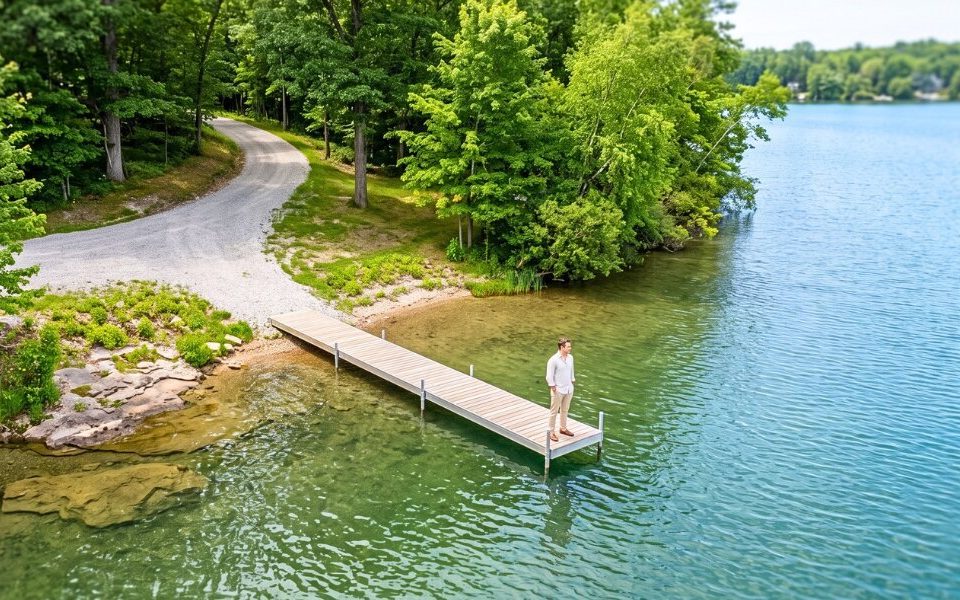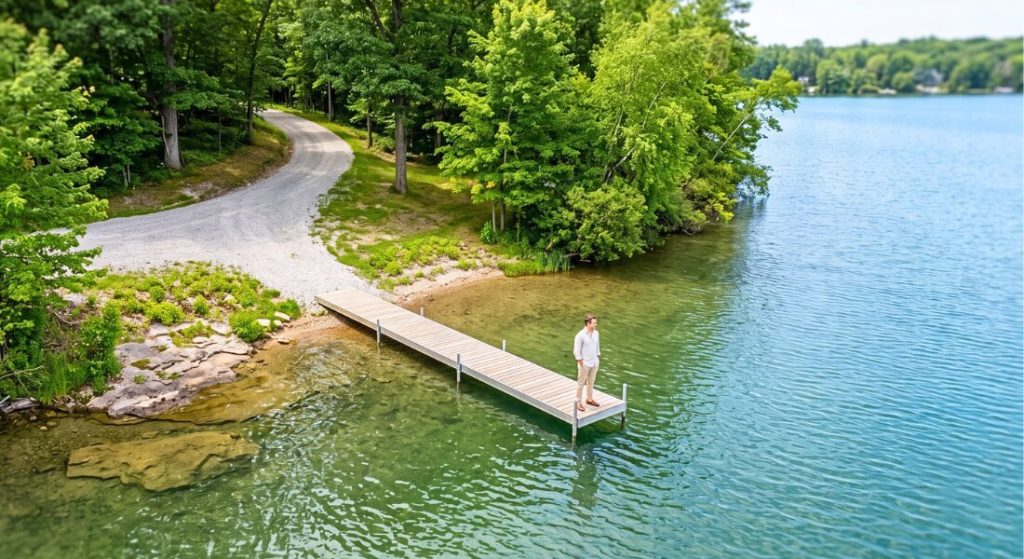

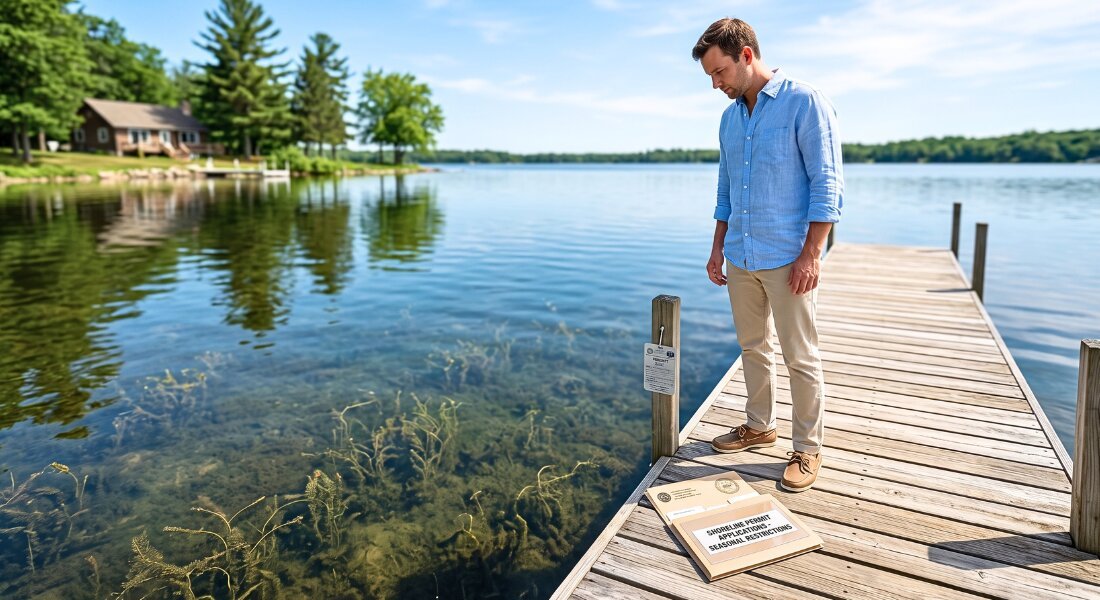
Most buyers who visit a lake property in July aren’t thinking about what’s underneath the water. They are thinking about the dock, the view, the water clarity. A mucky lake bottom in Southwest Michigan often stays hidden during a tour, and knowing that upfront helps you plan ahead.
Step off the pier and sink six inches into cold, black silt, and the whole experience shifts fast. Some buyers find they can happily live with a soft lake bottom over time. Others discover they really can’t, and that’s worth knowing early on.
The buyers who struggle with a mucky bottom later typically assume they’ll find a quick and easy fix after closing. That assumption usually doesn’t hold up once permitting gets involved. The process alone tends to slow most improvement plans before they even get started, so planning genuinely helps.
A lake bottom rarely gets much attention during an otherwise impressive property showing. That can change quickly when buyers discover soft sediment beneath the water. Improving those conditions requires more planning than many buyers initially expect. Understanding the options and limitations early makes the purchase decision much clearer.
The Reality of Fixing a Mucky Lake Bottom in Southwest Michigan
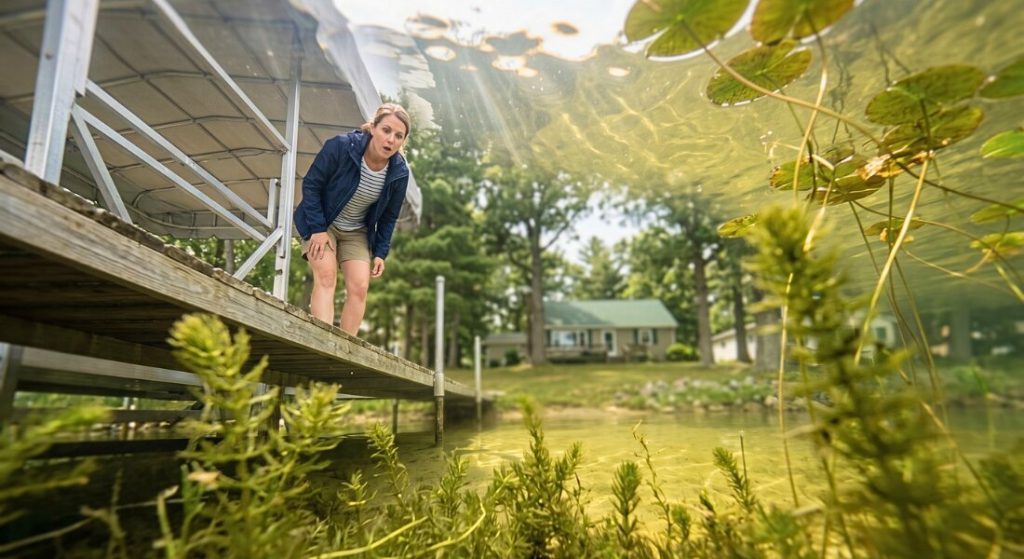
Property owners have a few options when it comes to improving a mucky or weedy lake bottom. These include installing a weed barrier mat, adding a layer of sand, or removing invasive vegetation. Some property owners find that combining all three works especially well. None are as simple as they look from the dock, but the results can be worth it.
In Michigan, any time you touch the water, you need a permit. That approval comes from either the Michigan Department of Natural Resources or EGLE. You must get that sign-off before a single shovel goes in the ground. It’s also required before any truck backs down to the water’s edge.
Buyers who plan to tackle this after closing sometimes skip that part at first. They’ve found a contractor, they have a plan, and things feel ready to go. Then they discover they can’t start until the permit gets approved.
Timing Kills Most Bottom Improvement Plans Before They Start
Permit windows for waterfront work in Michigan tie to fish and turtle nesting cycles, not to weather or contractor availability.
Work near the shoreline or on the lake bottom typically cannot begin until July. Certain fish species need to complete their spawning cycles first. Turtles also have protected status in Michigan, and nesting areas can directly affect project timelines.
A buyer who closes in May might hope for a clean, sandy bottom by the Fourth of July. That timeline just needs a bit more room, since permitting takes its own pace. The work can’t happen on that schedule, no matter how ready the buyer is. Even a reasonable plan on paper still needs to work within the state’s timeline.
What Does Bottom Work Actually Cost?
Even when the timing works out, cost depends on factors most buyers don’t consider during their tour.
A few good questions can really help clarify scope from the start. When assessing costs, you need to ask:
- How far out from shore does the muck actually begin?
- Is the approach fairly shallow, or does a channel factor into it?
- Is the bottom uniformly soft, or only in wind-driven pockets where debris collects?
Buyers who haven’t asked these questions before closing can still benefit by asking now. Some find themselves negotiating a project they’d priced at just a few thousand dollars. Getting a clearer estimate early on helps avoid watching that number climb unexpectedly later.
A Mucky Lake Bottom May Be More Complicated Than It Looks
The concern runs deeper than most buyers realize at first. Certain sides of a lake naturally collect debris when the wind pushes it consistently one way. This can make the bottom softer in spots that look identical from the dock.
Weeds that have been cut down also blend right in once the water turns cold or icy. Buyers touring in winter or early spring have less visibility into what’s waiting beneath the surface, which is why timing and good questions matter.
Michelle Scott has spent over two decades in Southwest Michigan waterfront markets. She covers the mucky lake bottom question in every buyer conversation before any offer gets written, because the same surprises keep surfacing after closing.
“You can put a weed barrier down and sand on top of it. Some companies will give you the sand for free and charge you for the labor. But you have to get the permits. And you can only put it in at certain times of the year. You have to wait until July because you have to wait till certain fish species have had their little fish. Turtles are a big thing around here too. Anything that touches the water needs a permit: the weed barrier, the sand, the gravel, all of it.” – Michelle Scott, Broker and Owner
What the EGLE Permit Process Requires Before Work Begins
EGLE administers the Part 301 Inland Lakes and Streams permit under Michigan’s Natural Resources and Environmental Protection Act (NREPA). This includes weed barriers, sand additions, and gravel placement, since keeping the state in the loop from the start helps avoid delays later. It’s best to plan for this early in the process.
Reviewing agencies may include EGLE, the local county drain commissioner, and sometimes the Army Corps of Engineers. That last one typically applies to projects that touch navigable waters.
Projects involving invasive species removal may follow a separate approval pathway under Michigan’s Aquatic Invasive Species program. Some invasive plants also require specific herbicide treatment permits, which a general contractor can’t obtain on your behalf.
Knowing which permits apply to a specific property before closing isn’t optional. It is the difference between a project that starts in July and one that starts the following summer.
What You Should Ask Before Making an Offer
If the lake bottom is a meaningful factor in how you plan to use the property, it’s worth raising early in the process. Ideally, that conversation happens well before closing, giving you plenty of time to plan.
Specifically, ask a few key questions early on:
- How far out does the muck actually extend from shore?
- Has any bottom work been done previously, and were permits pulled at the time?
- Do aquatic invasive species require any special removal approval before treatment?
- How does the dock approach hold up when it comes to navigating current water levels?
Answering these questions will help you price the property accurately and set a realistic timeline for any improvements you are planning. A buyer who goes in with that information is in a materially different position than one who discovers it six weeks after closing.
For a broader picture of what drives value at the water’s edge, see how frontage and lot configuration affect lakefront pricing.
Common Questions About Mucky Lake Bottoms in Southwest Michigan
Can you add sand to a Michigan lake bottom without a permit?
Not on your own, and it helps to know that upfront. Any work that contacts the water in Michigan requires state approval before it begins. This includes sand placement, weed barrier installation, gravel, and seawall work. The relevant agencies here are the Michigan DNR and EGLE. Going through the proper permit process helps property owners avoid enforcement action or potential removal orders down the road.
When can you legally do mucky lake bottom work in Michigan?
Most shoreline and bottom work in Michigan cannot start until July. This timing restriction protects spawning fish and nesting turtles, both protected under state law. Contractors and property owners must wait for those biological cycles to complete before any permitted work begins, regardless of weather or contractor availability.
Why is the bottom muckier on one side of a lake than the other?
Wind direction shapes the lake bottom over time. Prevailing winds tend to push surface debris consistently toward the downwind shore, year after year. This gradually concentrates organic matter and silt on one side of the lake. A bottom that looks perfectly clean on a calm summer day can still hold soft material underneath, once you factor in the wind.
Can you see weeds or bottom problems during a winter or spring showing?
Not always reliably, and that’s worth knowing before you tour. Cut weeds leave no trace in cold water, and soft bottoms are easier to assess once it clears. Buyers touring in shoulder seasons often can’t tell what the bottom holds. Standing in the water on a warm day usually gives the clearest answer.
Do invasive aquatic species require special permits to remove in Michigan?
Yes. Certain invasive aquatic plants in Michigan require specific removal approvals beyond the standard waterfront work permit. Property owners cannot simply pull or treat them without following the applicable regulatory process. A local waterfront specialist or the Michigan DNR can identify what is present on a specific property and what the removal pathway looks like.
Does lake bottom condition affect property value or negotiation?
It can, and that’s actually good news for prepared buyers. When bottom work carries a meaningful price tag and a tight timeline, that cost belongs in the offer negotiation. Buyers who identify bottom conditions before writing an offer have real options. They can price the property accordingly or negotiate a credit with the seller. That’s a much better path than absorbing an unexpected expense after closing.
Is a sandy bottom guaranteed to stay sandy after improvement work?
No, sand placement improves conditions but doesn’t permanently eliminate soft-bottom dynamics. Wind patterns continue to deposit debris over time, and weeds can regrow in areas where underlying conditions support it. Some buyers treat bottom maintenance as an ongoing seasonal task rather than a one-time fix.
Know What You Are Buying Before the Offer Gets Written
A mucky bottom is not automatically a reason to walk away from a property. For some buyers, it is a manageable condition with a realistic solution. For others, the timeline and permit process make the project impractical given how they plan to use the place.
If you’re evaluating lake property in Southwest Michigan, it helps to understand exactly what you’re looking at on the waterfront. Start a low-pressure conversation with Michigan Lakes Team before you write your offer.
ABOUT THE AUTHOR
Michelle Scott | Multi-Million-Dollar Producer | Owner, Michigan Lakes Real Estate Team Inc. | Licensed Realtor® since 1995 | Waterfront Specialist across 120+ Southwest Michigan lakes | Licensed in Michigan and Indiana