
A standard home inspection provides a solid foundation when evaluating a lake property, but these homes have unique concerns. Waterfront homes in Southwest Michigan often include elements like seawalls, crawl spaces, and long-term moisture exposure that benefit from a closer look.
Knowing how to build on the inspection report helps you make a confident, informed decision.
What a Standard Inspection Covers
A home inspection evaluates the structure, mechanical components, and visible conditions of a dwelling. The inspector walks the property, observes what is accessible, and reports what they see.
The operative word is accessible. On a lake property, the most costly problems often stay hidden unless someone checks them.
Lake homes carry a different risk profile than suburban houses. Many were built decades ago as seasonal cottages. They have since aged under conditions such as moisture, freeze-thaw cycles, and proximity to standing water. These factors accelerate deterioration at rates a standard checklist was never designed to catch.
The American Society of Home Inspectors (ASHI) sets the standard practices most inspectors follow. Those standards apply to year-round residential construction. They were not written for a 1960s cottage sitting six feet from a private lake in Cass County.
Lake homes require more thorough inspections than standard residential inspections because they face unique risks from moisture, freeze-thaw cycles, and aging infrastructure that typical inspection checklists were not designed to catch. Standard inspections often miss critical issues like hidden water intrusion, mold behind walls, rotted floors under furniture, seawall damage, and crawl space deterioration that are common in waterfront properties. Buyers should ask inspectors to specifically investigate moisture-prone areas, request open attic access, and hire specialists to assess seawalls, docks, and crawl spaces before closing.
Issues Standard Inspections Might Miss
A standard inspection will cover many important issues. However, it may miss key elements that could be important for a lake home.
- Rotted Floors: Rugs, staged furniture, or anything covering the floor can hide damage. A buyer discovering this after closing has little recourse.
- Water Intrusion: Many older lake homes have mechanical components or well equipment situated in a crawl space or basement. Signs of water intrusion often hide behind finished walls. A strong musty smell in a lake home is an active question, not a quirk of age.
- Mold Behind Walls: Lake homes experience persistent humidity. Mold can grow behind paneling, drywall, or any finished surface that is repeatedly exposed to moisture. Inspectors cannot see behind walls unless asked to investigate. The EPA guidance on mold notes that visual surface assessments are insufficient when suspecting moisture intrusion.
- Structural Problems: Many older lake homes were not built on pilings or helical piers. Freeze-thaw cycles and long-term moisture exposure can cause settling, wavy floors, and framing shifts. Dirt crawl spaces with water exposure create structural risks that require a specialist.
- Seawall Condition: Cracks, separation, or structural failure can be costly to repair. These conditions are outside the scope of a standard home inspection and require a specialist assessment.
There’s also more to evaluating and valuing a lake home than inspections and the condition. Our article on how views and lots drive lakefront value breaks down the key factors that set lakefront pricing and demand.
Questions to Ask During Your Inspection
Certain issues on a Michigan lake home require specialist attention:
- Foundation and Framing: Check for structural integrity.
- Crawl Space: Look for moisture, drainage issues, and signs of mold.
- Seawall or Riprap: Inspect for erosion, damage, or instability.
- Walls Near Moisture-Prone Areas: Watch for hidden moisture or prior repairs.
During the inspection, ensure attic access is open. Lake home attics often hide moisture damage, mold, inadequate insulation, or previous leaks that were never properly fixed. A closed panel leaves these risks invisible.
Michelle Scott has worked exclusively with Southwest Michigan waterfront properties since 2003. She focuses on the questions buyers often don’t know to ask before committing.
“Mold is something we always watch for, and cracks in the basement. If a house has a really strong musty smell, there’s water somewhere. If they have something covering the walls or covering the floor, that’s something people just need to be aware of. Inspectors cannot move furniture.” – Michelle Scott, Broker and Owner.
Not sure what your lake home inspection should really cover? Connect with the Michigan Lakes Team before your inspection window closes. It’s a low-pressure conversation, and asking the right questions at the right time makes all the difference.
What a Standard Inspection Does Not Include
A standard inspection does not include:
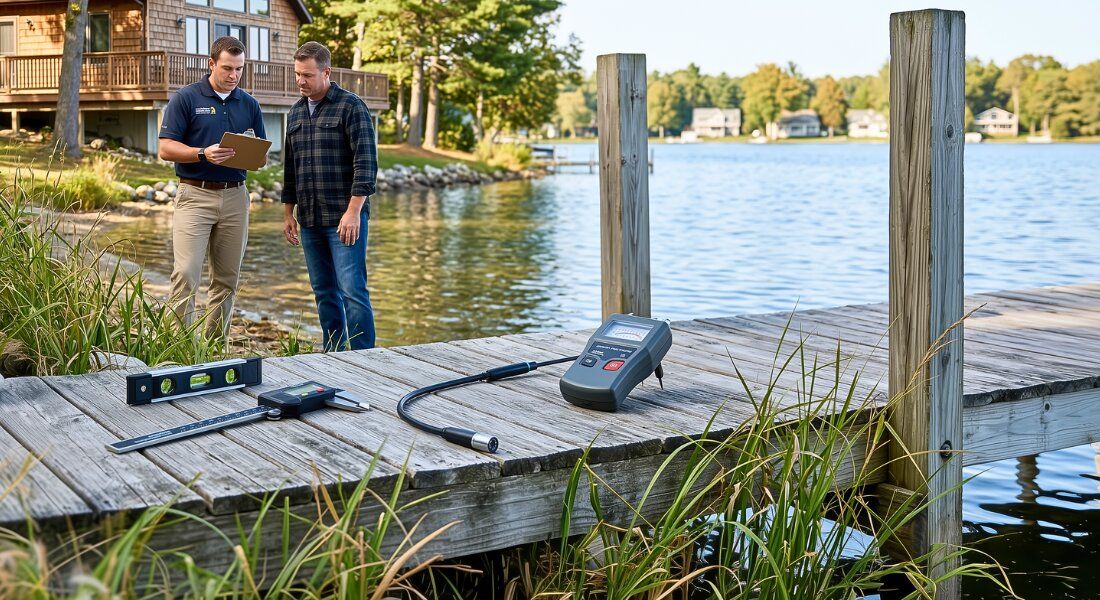
- The dock
- Seawall integrity
- Well water quality beyond basic testing
- Septic capacity relative to intended use
These are not minor omissions. Each can represent high costs after closing. Standard inspections often miss them unless a lake-experienced inspector checks.
For lake septic systems, see our guide on lake home septic inspections to understand what to check before waiving contingencies.
How a Standard Inspection Can Miss Something
Lake homes can come with hidden risks. One example illustrates this perfectly:
“I had one client where we did a final inspection, walked through all the rooms. After closing, the woman walked around the side of the bed. The floor felt like it was almost falling through. It had rotted. When we were walking through it, she wasn’t standing by the side of the bed. She was just walking around it. And the inspector cannot move anything.” – Michelle Scott, Broker and Owner.
The right approach is to understand what the report covers and explicitly ask for what it does not.
Lake Home Inspection FAQs
What does a standard home inspection cover on a Michigan lake property?
A standard home inspection evaluates the home’s visible and accessible structural, mechanical, and condition-based elements on the day of the visit. It does not include docks, seawalls, well water quality beyond basic testing, or septic capacity. It also cannot assess anything hidden behind finished walls, under furniture, or in a closed attic.
Why do lake homes carry a different risk profile than suburban houses?
Many lake homes began as seasonal cottages and have aged with persistent humidity, freeze-thaw cycles, and proximity to standing water. These conditions accelerate wood rot, foundation settlement, and mold growth faster than in typical suburban homes. Standard inspections for year-round houses do not account for these patterns.
Can a home inspector assess a seawall?
No. Seawall evaluation requires a specialist. Visible cracks, separations, or structural issues should prompt a separate specialist assessment before closing.
What should a buyer watch for that an inspector might miss?
Look for musty odors, finished walls near water or in below-grade areas, covered floors, moist crawl spaces, and closed attic access. These areas can conceal water damage, mold, or structural deterioration that a standard inspection may not reveal.
Should I get a separate inspection for the dock and seawall?
Yes. Both are critical structural elements outside the scope of a standard inspection and can carry major repair costs. Assess them separately before closing.
How does crawl space moisture affect the structural condition of a lake home?
Dirt crawl spaces are vulnerable to water intrusion. Repeated moisture softens wood framing, promotes mold, and accelerates foundation movement. Older lake homes with water-exposed crawl spaces can develop uneven floors, shifting framing, or soft spots. A standard inspector walking on the surface may not detect these issues.
What should I do if a lake home has a strong musty smell?
Treat it as a serious concern. Musty odors usually indicate active or past water intrusion. If walls or floors cover the source, it may remain hidden. Ask for a targeted investigation before removing contingencies.
Is attic access important in a lake home inspection?
Yes. Lake home attics can harbor mold, be inadequately insulated, or have prior leaks. Closed access hides these risks. Confirm attic access is open before the inspection, and coordinate with your agent in advance.
Get a Complete Picture Before Making an Offer
A good inspection is a snapshot, not a guarantee. It shows what was visible on a single day to a single person, using general residential standards. On a lake property, that snapshot leaves real gaps, and the things it misses often cost the most.
Are you looking to buy a lakefront property? Schedule a consultation to ensure your inspection covers every critical detail.
Michelle Scott is the founder of Michigan Lakes Real Estate Team Inc. She has been a licensed real estate broker since 1995 and holds licenses in both Michigan and Indiana. Specializing exclusively in Southwest Michigan waterfront properties, she has recorded over $35.5 million in recent tracked volume and closed more than 50 documented transactions in the past five-year period.
ABOUT THE AUTHOR
Michelle Scott | Multi-Million-Dollar Producer | Owner, Michigan Lakes Real Estate Team Inc. | Licensed Realtor® since 1995 | Waterfront Specialist across 120+ Southwest Michigan lakes | Licensed in Michigan and Indiana