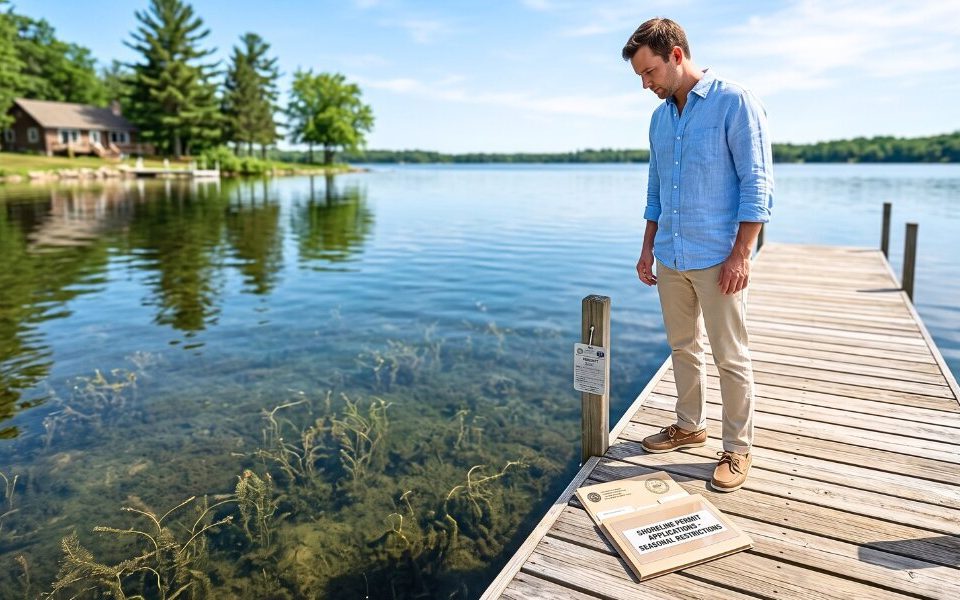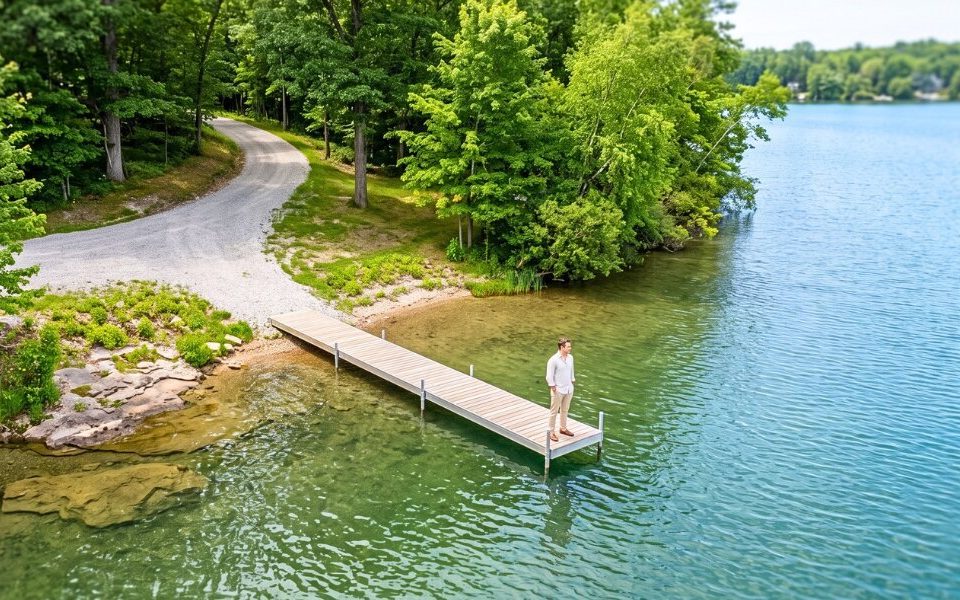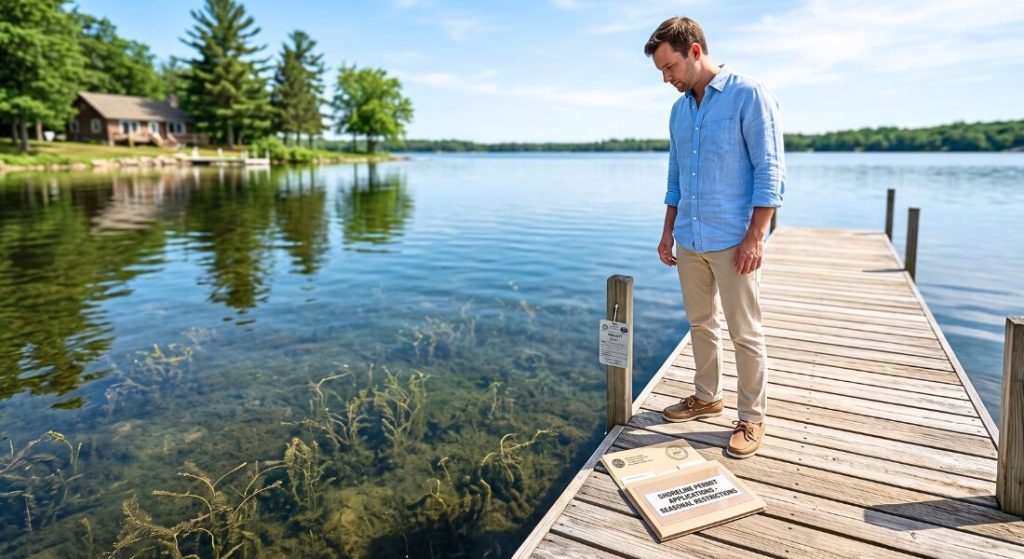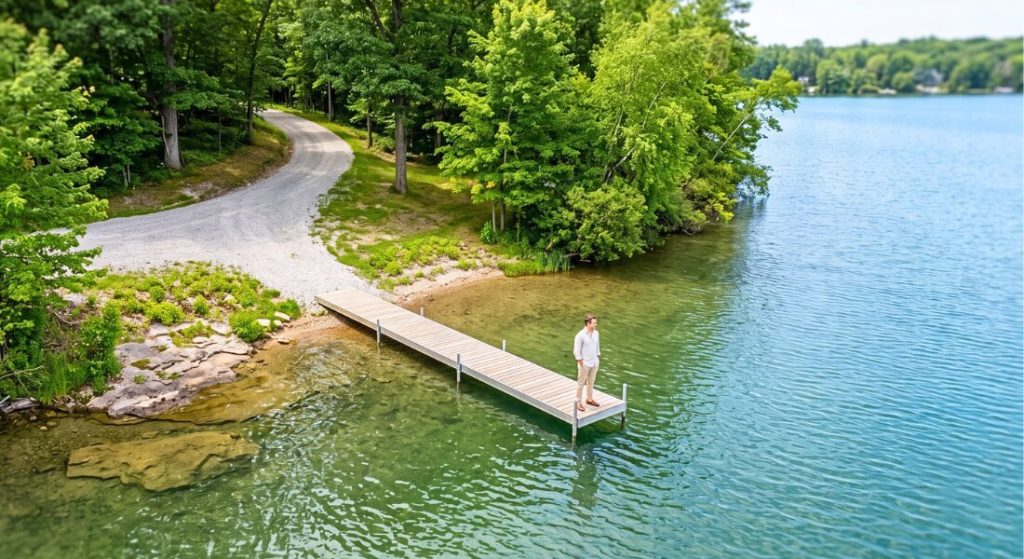

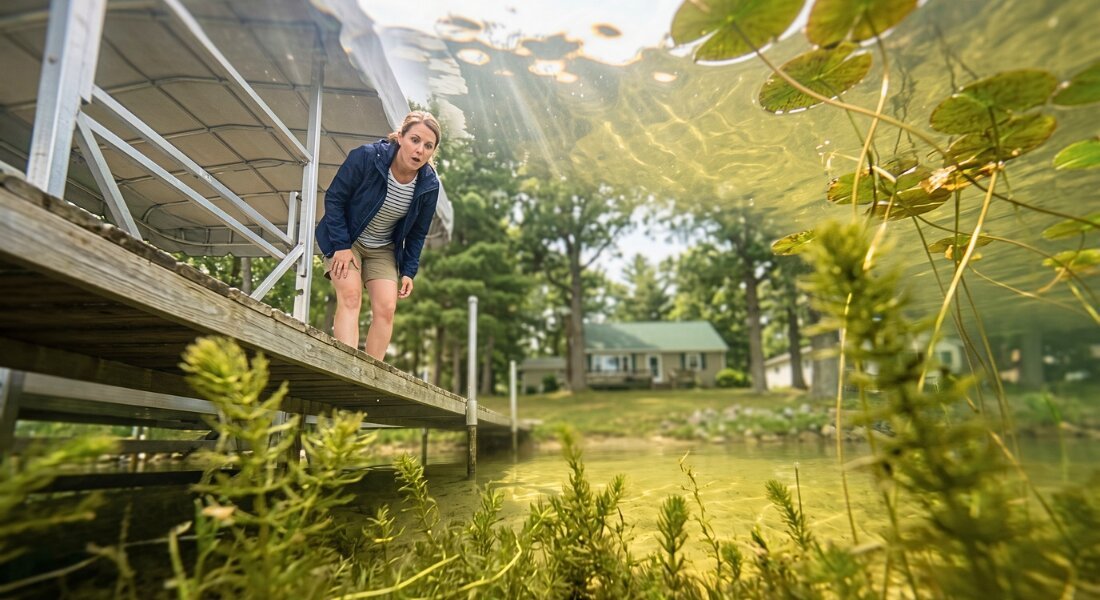
The home looks pristine in the photos, but property maintenance can surprise people new to owning a lake home. For many new lake homeowners, weeds are one reality they need to prepare for.
We’re not talking about a massive algae bloom or unsafe water, just normal, natural lake vegetation. Inland Michigan lakes are living systems that change throughout the season. Unlike a swimming pool, a lake isn’t a controlled environment. Understanding that difference can help you have a better experience when you reach your first August.
Lakefront ownership brings natural changes that aren’t always visible in listing photos. Shoreline vegetation is one reality many new lake homeowners encounter unexpectedly. Healthy inland lakes naturally support plant growth throughout the warmer months. Understanding these seasonal rhythms can make ownership feel more manageable.
Most Inland Michigan Lakes Get Weedy
A common myth suggests only neglected lakes get weeds, but that is far from the truth. Natural vegetation tends to grow in shallow, sunlit water, including clear, healthy lakes. Seeing weeds is actually a sign that the lake is well balanced and has the conditions to support life.
After years of walking shorelines with buyers who are new to lakes, Michelle Scott regularly explains what vegetation actually means and what it does not.
“Once you go out about 10 feet, all the lakes get weedy. As long as you tell people that’s what’s going to happen. Some of them hear it, and some people don’t. Typically, you’re using the front half, the first 10 feet, and then you’re going on your boat. I would say they don’t like having to cut down the weeds. That’s maybe the biggest surprise about the shoreline is how they have to maintain it.” – Michelle Scott, Owner and Founder, Michigan Lakes Team
Weeds help oxygenate the water and support healthy fish habitat throughout the season. They stabilize sediment too, and naturally shift with temperature and sunlight over time. Rather than being a sign something is wrong, weeds tell you the lake is healthy.
Most property owners don’t regret the presence of weeds. It’s just that some don’t expect them. Buyers need to align their expectations with reality.
The First 10 Feet Matter More Than the Rest
Most families do not wade 40 feet into a lake. They step in near the dock and let kids splash in the shallow zone. Maybe they swim off the end of a dock or head out in a boat.
If that first stretch of shoreline is firm and usable, satisfaction stays high. But many buyers mentally picture the entire lake bottom as a sandy, barefoot surface. That expectation often comes from vacation properties or filtered photography.
On paper versus real lake life, the phrasing can look different at first glance. The listing might boast “crystal clear water” as a selling point. In practice, that translates to “this is a natural lake with seasonal vegetation,” and that’s perfectly fine. Those two statements aren’t contradictory; clear water and healthy plant growth can absolutely coexist.
When evaluating a property, focus less on how far you can see from the dock. Instead, pay attention to how the first ten feet feel underfoot, since that’s where daily use actually happens.
Maintenance Is Part of Ownership
Another common surprise for new lake owners is the upkeep involved. You can cut back some vegetation as needed throughout the season. You can trim cattails within local regulations, and lily pads are often managed seasonally, too. There are licensed lake service companies happy to handle shoreline maintenance for you.
Still, it’s worth knowing upfront that some ongoing involvement remains part of the experience. Buyers relocating from urban environments often underestimate this shift in daily responsibility.
At the lake, maintenance becomes a bit more personal, or at least more visible. You see the shoreline every single day and naturally notice seasonal change as it happens. You also have a few extra steps to prepare for winter.
Understanding that shift before you buy makes ownership feel like a welcome rhythm. It becomes simply part of how you steward and enjoy the property.
A Short Story About Expectation
Last summer, a buyer stood on a dock in July and said, “This water is beautiful.” It truly was, clear, calm, and reflective under the summer sun.
We returned in late August, just before closing, to take another look. The water level had shifted slightly, and the sun had intensified growth in the shallows. Vegetation was now visible about eight to ten feet out from shore. If anything, it was a sign of just how healthy and alive the lake really was. Still, it was interesting to notice how the buyer’s reaction shifted along with the season.
The buyer paused and said, “I did not think it would look like this.”
That moment mattered more than it might have seemed at the time. We walked the shoreline together and talked through the natural seasonal cycles at play. We discussed what light, manageable upkeep would actually involve going forward. We adjusted expectations together before the paperwork was ever finalized.
In the end, they closed with real clarity instead of any unwelcome surprise. That honest conversation prevented regret, not because the lake changed, but because their understanding did.
Public Access and Water Testing Realities
On larger lakes with public access, occasional water testing and monitoring can reveal temporary issues such as elevated bacteria levels after heavy usage or rainfall.
That doesn’t take away from a lake’s appeal; it’s often the result of what makes it special. It reflects that the lake is a shared resource with patterns of use that affect testing cycles.
Buyers who do their own research online can benefit from some added context. Buyers who understand how inland Michigan lakes actually function tend to respond in a much more balanced way. They naturally ask about frequency, duration, and history rather than reacting to a single data point. That kind of education helps prevent overcorrection and leads to smarter decisions.
The Emotional Gap Between Expectation and Reality
The weeds aren’t something to regret after buying a property. Most buyers just feel surprised by something they didn’t expect. It’s more about not knowing ahead of time than the actual reality.
The good news is that a little upfront information keeps ownership feeling like a confident choice, not a mistake. Honest conversations before purchase matter more than glossy photos after.
Buyers who tend to enjoy long-term lake ownership usually:
- Spend time physically in the water before closing
- Ask about seasonal shoreline changes
- Budget for light shoreline management
- Accept that lakes are ecosystems, not resorts
Buyers who focus only on finishes and assume the water will take care of itself are more likely to feel unsettled within a few seasons. That pattern has less to do with market cycles and more to do with expectation gaps.
FAQs About Lake Weed Maintenance in Southwest Michigan
Are weeds normal in Michigan inland lakes?
Yes. Aquatic plants are a natural and important part of inland lake ecosystems. They provide habitat, stabilize sediment, and support fish and wildlife.
Does clear lake water mean there won’t be weeds?
No. Clear water and aquatic vegetation can coexist. Plant growth is particularly common in shallow areas where sunlight reaches the lake bottom.
Should buyers be concerned if they see weeds around a lakefront property?
Not necessarily. The type, location, density, and seasonal behavior of the vegetation matter more than simply seeing plants in the water. Buyers should evaluate how the shoreline functions for the activities they expect to enjoy.
Can lakefront homeowners remove weeds themselves?
Sometimes, but Michigan regulates aquatic vegetation management. Chemical treatments in state waters generally require authorization, while certain mechanical methods may also require permits. Homeowners should check applicable EGLE requirements before treating or removing aquatic vegetation.
When should buyers evaluate shoreline vegetation before purchasing?
Ideally, buyers should see the property during the season when they expect to use it most. Seasonal changes can affect vegetation, water levels, and the overall appearance of the shoreline.
Expectations Make All the Difference
Beautiful listing photos show you the property, but they can’t show you everything about lake ownership. The shoreline changes, vegetation grows, and maintenance becomes part of the seasonal rhythm. Knowing that before you buy can make the difference between feeling surprised and feeling prepared.
The Michigan Lakes Team has spent years helping buyers understand those differences across Southwest Michigan’s many unique lakes. Our approach focuses on education, so buyers know what they’re getting before they commit. If you’re considering a Southwest Michigan lake home, get in touch to have an honest conversation about what to expect.
ABOUT THE AUTHOR
Michelle Scott | Multi-Million-Dollar Producer | Owner, Michigan Lakes Real Estate Team Inc. | Licensed Realtor® since 1995 | Waterfront Specialist across 120+ Southwest Michigan lakes | Licensed in Michigan and Indiana