
That picture-perfect lake listing online can be misleading for Chicago buyers. The biggest mistake is assuming all Southwest Michigan lakes are one market. They’re not the same.
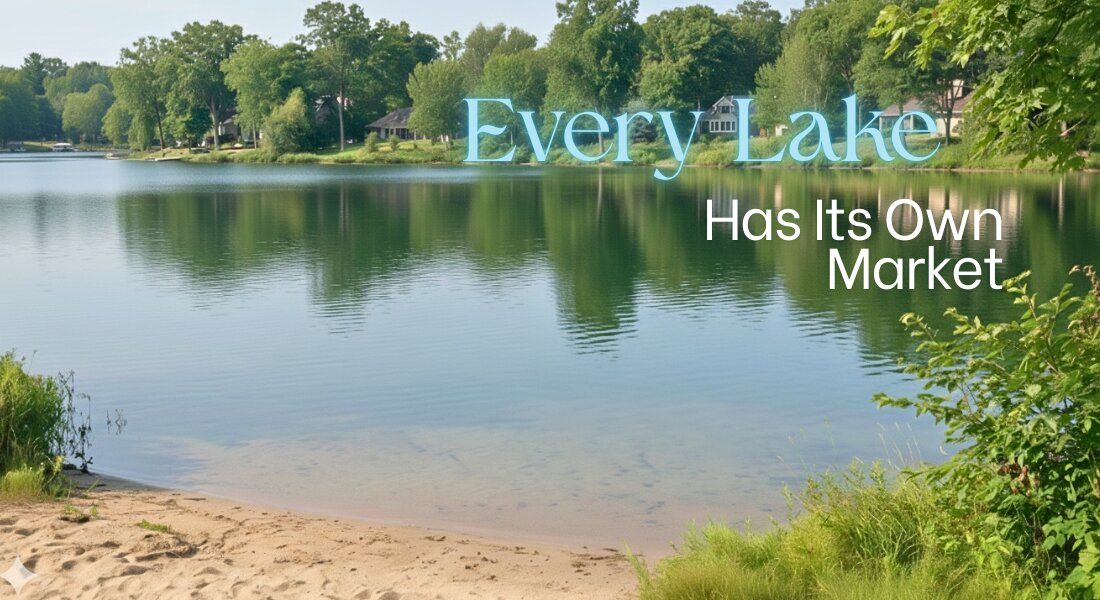
Every lake is its own micro-market, with unique water clarity, bottom texture, weed patterns, boating culture, and buyer demand. When someone says, “We just want a lake property,” I will ask more questions about what they want in a lake.
On paper, listings may look identical. Sparkling sunsets, blue water, a dock stretching into calm glass. But real lake life depends on what feeds the water, what lies underfoot, and how the wind shapes the shore.
Chicago Buyers Want Familiar Lakes
In real conversations, most Chicago buyers arrive with a short list of lakes they’ve heard of from friends or acquaintances. Familiarity feels safe. Certain names come up again and again:
- Sister Lakes (Magician, Round, Dewey, Big crooked, Little Crooked, & Cable)
- Diamond Lake in Cassopolis
- Eagle Lake in Edwardsburg
- Paw Paw Lake in Coloma/Watervliet near Lake Michigan
It’s not random. There are 120 lakes to choose from, under 3 hours from the city. Most of them are off 94 and the toll road that will help you cut down on time. That distance hits a psychological threshold for second-home buyers balancing work, school, and life based in Chicago.
Here’s the trap (want to change this): familiarity doesn’t equal comparability. Two lakes within the same drive can deliver completely different ownership experiences. Assume they’re the same, and you risk buying on a lake that doesn’t match the lifestyle you actually want.
The Lake Is the Product. The House Is the Packaging
Stop treating the house like the main event. The lake is the main event.
Two properties can look identical online yet command very different prices because their lake experiences differ. Before worrying about finishes or renovations, start with the water itself.
Ask questions that feel unglamorous but matter:
- Is it spring-fed, river-fed or alluvial?
- Is the bottom sandy, silty, mucky or gravel?
- Does one side get weedy because of the prevailing wind?
- How usable is the shoreline for swimming?
- Bay vs main part of lake?
- What kind of boating culture dominates summer weekends?
These are not lifestyle extras. These are “What do we really want in a lake property?” questions. Usage drives both enjoyment and resale.
Seeing the Differences Up Close
I’ve sold and advised on lake properties across Southwest Michigan since the early 2000s. Walking through dozens of lake homes has shown me how their unique traits shape the way people enjoy them. These traits also influence pricing and a lakehouse’s long-term value.
No two lakes are alike, and they’re not making any more of them. Everything is unique. Some are spring-fed with sandy bottoms. Others are river-fed with less-than-sandy bottoms. One side might be weedy because of the wind. All these factors go into pricing a lakehouse.
How Micro-Markets Shape Pricing
Traditional housing markets rely heavily on comparable sales. Lake markets don’t work that way.
Even when two homes sit close together, comparables can be misleading. The buyer pool shifts with the lake, not just the location but the privacy. One lake draws high-energy families seeking constant activity. Another draws buyers who want fishing, quiet water, and fewer boats.
When demand shifts, pricing ceilings shift. Days on market also shift.
Sellers often get tripped up here. They see a strong sale on a nearby lake and assume they should price their property the same. But buyers aren’t shopping “nearby.” They’re shopping for what this lake has to offer.
If the lake has less lakefront, more weeds, heavier traffic, or a fading view, buyers respond accordingly. The adjustment shows up as price reductions, extended days on market, or lower final-sale numbers.
Don’t borrow confidence from a different lake. Evaluate the one in front of you on its own terms.
A Short Story About Two Docks
A Chicago couple toured two lake homes the same weekend. Both were just a few miles apart. Both had updated kitchens and faced west, promising sunsets.
At the first house, they walked into the water and felt firm, sandy ground beneath their feet. The lake floor felt stable. Kids waded nearby without hesitation, and boats passed with wakes that settled quickly.
On paper, the homes were comparable. In person, the experience wasn’t. They bought the first property not for the kitchen. The decision came down to how they could picture themselves enjoying the lake, year after year.
That’s how micro-markets reveal themselves. Not in photos, in the water and by the lake.
Slow Down Before You Fall for a Lake Home
If you want to reduce regret rather than chase momentum, slow down before falling for a house.
- Separate the idea of pretty home from usable shoreline. Wide-angle photos can make almost any shoreline look appealing. Usability is physical. Consider what you feel underfoot, whether guests can wade comfortably, and whether you will actually swim off your dock.
- Ask what feeds the lake and what that creates. Spring-fed versus aquifer is not trivial. It often signals differences in bottom composition, water clarity patterns, and seasonal changes.
- Treat the lake culture as a real feature. Some lakes run like a playground. Others feel like a sanctuary. Buy into the wrong culture, and you’ll either feel irritated every weekend or under-stimulated and restless. Know where the public access and sandbar are.
Choosing a Pattern, Not Just a Property
Most Chicago families buying in this market imagine a repeating summer pattern: Friday arrival. Saturday on the water. Sunday is a slow morning. Repeat all season.
Suddenly, the narrative shifts from anticipation to obligation. “We thought we would be here every weekend” becomes “We are paying taxes and maintenance for something we barely use?”
“Regret” in lake markets rarely stems from a single dramatic flaw. It builds from small friction points that compound over time.
Common Lake Home Buying Questions
Are all the Southwest Michigan lakes similar if they are close together?
No. Lakes within a few miles of each other can differ in depth, bottom composition, clarity, boat traffic, popularity, and acreage. Proximity does not equal similarity. Each lake functions as its own micro-market with distinct buyer demand.
Does spring-fed versus river-fed or aquifer really matter?
It often does. The water source can influence clarity, bottom feel, and seasonal behavior. It is not the only factor, but it is a useful starting point when evaluating long-term usability.
Why can pricing vary so much between nearby lakes?
Buyer behavior drives that gap. Lakes with better swimming, clearer water, or a preferred boating vibe attract more buyers, boosting both prices and resale value.
Should I focus more on the house or the shoreline?
Start with the shoreline. Structural lake characteristics cannot. If the water experience disappoints you, no renovation will fix that.
Do micro-markets affect resale value later?
Yes. The same physical factors that shape your experience shape future buyer demand. Lakes with stronger usability, popularity, and clearer identity often hold value more consistently over time.
Find the Lake That Fits Your Life
Buying a lake home is about more than square footage or countertops. It’s about water you’ll actually use, a shoreline you’ll love, and weekends you’ll look forward to.
The Michigan Lakes Team can help you see how each lake really compares before you commit. We focus on the details that matter to ensure the lake you choose matches the life you want.