
You found the perfect lake home. The view is right, the lake fits your lifestyle, and you are ready to make an offer. Then your lender flags a problem you never saw coming.
This happens more often than most buyers expect in Southwest Michigan. Lake properties can have characteristics that conventional lenders treat as risk factors. A shared well, septic system issues, or seasonal-use restrictions can slow your closing. In some cases, these issues can contribute to loan denial.
Many of these properties are perfectly livable and have been enjoyed by families for decades. But underwriting focuses on collateral risk, property condition, and resale assumptions.
If you wait until the appraisal to discover a financing obstacle, you can lose time and potentially the deal. This post identifies the specific red flags that can affect financing on Southwest Michigan lake homes. Knowing them early can help you structure your offer, choose the right loan product, and avoid closing surprises.
Shared Wells and Lender Requirements
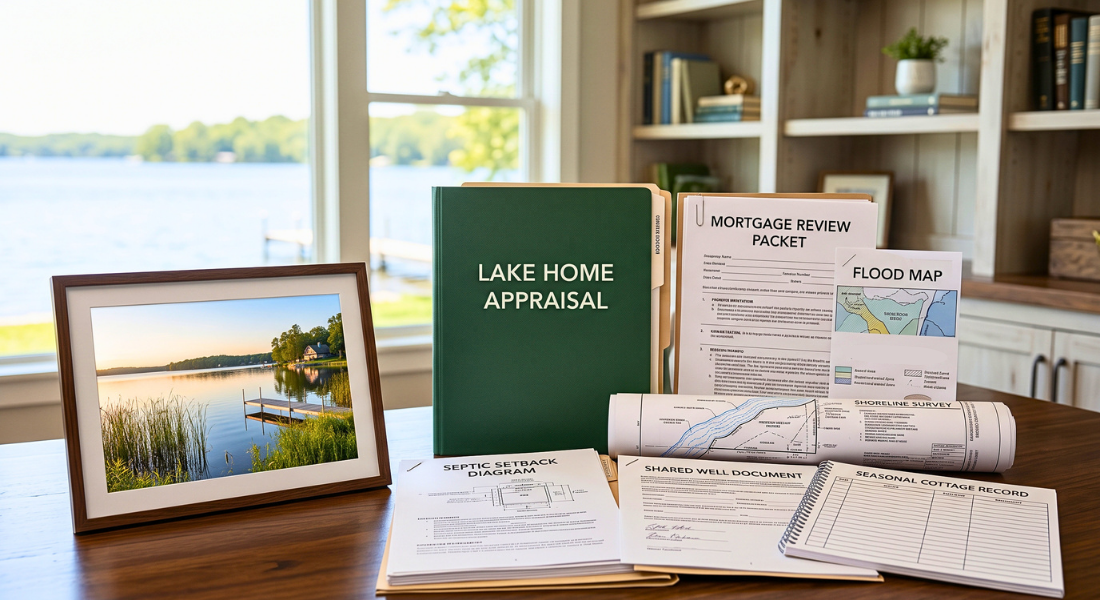
Shared wells are more likely to appear on older lake properties across Southwest Michigan. Two or three homes may draw from a single well under a decades-old informal agreement. For the families involved, it has always worked fine. For your lender, it raises questions about access, maintenance responsibility, and legal enforceability.
Conventional lenders may require a recorded shared well agreement before approving the loan. The document should establish maintenance duties, cost sharing, access rights, and responsibilities for future owners. If no adequate agreement exists, the lender may require one before closing. That means coordinating with neighbors who may not feel any urgency to sign paperwork.
FHA and VA loans have specific requirements for shared wells. VA requires a recorded well-sharing agreement, permanent maintenance access, and provisions for repair costs. FHA also requires a binding shared well agreement and may require inspection or water testing when applicable. FHA’s July 2026 waiver also changed certain well-distance requirements for existing homes.
On older lakes such as Paw Paw and Magician, these requirements can catch buyers off guard. Ask about the well situation before you write your offer, not after.
When Septic Setbacks Do Not Meet Current Code
Many lake homes in Southwest Michigan were built before current septic regulations were adopted. The drain field may sit closer to the lake than current code allows. The system might function perfectly but still fail to meet today’s setback requirements. That distinction matters to lenders and appraisers.
A non-conforming septic system does not necessarily mean the loan gets denied. However, it can trigger additional inspections or affect the property’s appraised value. Depending on the loan and property, a lender may require documentation or an evaluation of the septic system before closing. In Van Buren, Cass, and Berrien counties, local health departments handle septic requirements differently.
If the system needs replacement, the cost and feasibility depend on lot size and soil conditions. On tight lakefront lots, there may not be room for a code-compliant replacement system. Engineered alternatives exist but can cost significantly more. Understanding these issues upfront can help a buyer negotiate or plan for potential repair costs.
Seasonal Records Can Create Financing Issues
Some lake homes in Southwest Michigan may still be recorded or described as seasonal properties. County records may identify them as cabins or cottages rather than year-round residences. That information can raise questions about how the property is used and valued. It can also affect financing options.
Conventional lenders generally want properties to be suitable for year-round residential use. If the home lacks insulation, permanent heating, or winterized plumbing, it may not meet the lender’s requirements. The appraiser may flag these deficiencies. Some lenders may proceed if required improvements are completed, while others may not.
On lakes like Corey, Klinger, and parts of the South Chain, some older properties have been winterized over time. The home may function as a four-season residence while local records still reflect its earlier use. Before making an offer, confirm how the property is classified and whether its current condition meets the intended loan program’s requirements.
Flood Zones Can Add Insurance Costs
Flood zone status is another factor that surprises lake home buyers. Not every lakefront property sits in a high-risk flood area, but some do. If the building is in a Special Flood Hazard Area, your lender may require flood insurance before closing. That additional cost can change your monthly payment calculation.
FEMA flood maps determine these designations, but maps do not always reflect current conditions or the latest available data. A property near Diamond Lake or Gull Lake may have a designation that warrants closer review. If you believe a property was incorrectly mapped into a Special Flood Hazard Area, you may request a Letter of Map Amendment. Eligibility depends on meeting the applicable requirements, and the process takes time.
Flood insurance premiums vary widely based on the flood zone, elevation, foundation, and other property characteristics. FEMA considers several factors when setting flood insurance rates. Costs can vary substantially between lake properties. If flood insurance is required, your lender will typically require proof of coverage before closing. Factor that potential cost into your budget from the start.
Lake Home Financing Questions
Can I get a conventional mortgage on a lake home with a shared well?
Yes, but lenders may require a recorded shared well agreement covering maintenance, cost sharing, and access. Without adequate documentation, the loan may be delayed or become ineligible. Ask about the well arrangement before making an offer.
Will a non-conforming septic system stop me from getting a loan?
It depends on the lender, loan type, and condition of the system. A lender may require documentation or a septic evaluation before closing. Non-conforming systems can also affect appraisal or financing if they raise concerns about safety, functionality, or marketability.
How do I find out if a lake property is in a flood zone?
You can check FEMA’s Flood Map Service Center online using the property address. Your lender will also order a flood determination as part of the loan process. If you believe the designation is incorrect, review FEMA’s requirements for a Letter of Map Amendment and submit supporting documentation.
What happens if a lake home is classified as seasonal use?
Lenders may limit your financing options or require proof that the home is suitable for year-round use. You may need to show features such as permanent heating, adequate insulation, and winterized plumbing. Before making an offer, confirm the property’s classification and whether it meets your lender’s requirements.
Know the Red Flags Before You Offer
Inventory on Southwest Michigan lakes can move quickly, and financing problems can surface after you have found the right property. The Michigan Lakes Team can review current listings and flag property characteristics that may create financing concerns.
Share this guide with your lender before you start touring lake homes. If you’re unsure whether a property will qualify for your intended loan, ask before writing the offer.
Schedule a consultation today to discuss your options and get ahead of potential financing hurdles.
ABOUT THE AUTHOR
Michelle Scott | Multi-Million-Dollar Producer | Owner, Michigan Lakes Real Estate Team Inc. | Licensed Realtor® since 1995 | Waterfront Specialist across 120+ Southwest Michigan lakes | Licensed in Michigan and Indiana