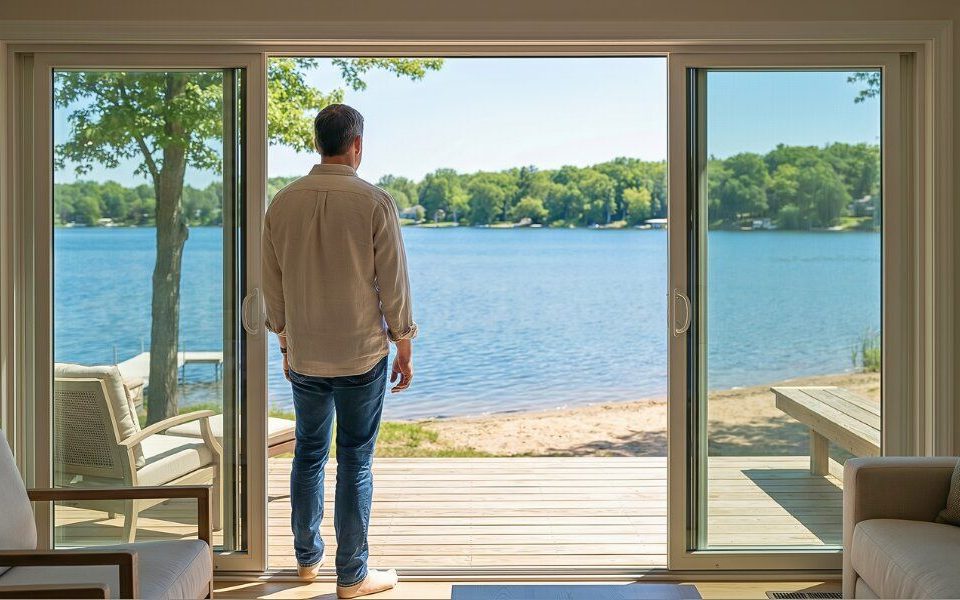

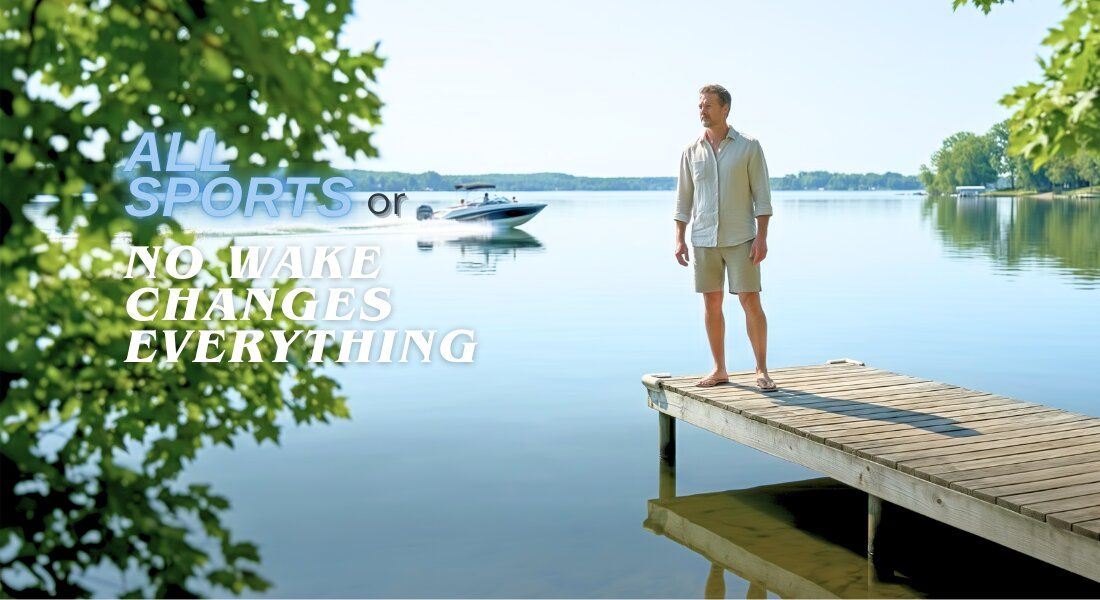
A lake can look calm in photos, but for most buyers, the real frustrations don’t come from the house. They come from the water rules.
All-sports. No-wake. Public access. Jet skis. Sailboat races.
These aren’t minor details. They shape every weekend, every summer, and your long-term enjoyment.
If you’re searching for a lake home in Southwest Michigan, boating rules and lake usage are not footnotes. They decide whether your weekends feel effortless or exhausting.
All-Sports or No-Wake?
In Southwest Michigan, lake rules create very different environments.
All-sports lakes allow higher speeds, jet skis, wakeboarding, and tubing during designated hours. No-wake lakes limit speeds to about 15 miles per hour and ban high-speed personal watercraft. That distinction immediately narrows the buyer pool.
High-energy households with teens and water toys tend toward all-sports lakes. Buyers who fish, kayak, paddleboard, or want quiet evenings often prefer no-wake.
After years of helping buyers on local lakes, I’ve found the biggest headaches usually come from jet skis. On a no-wake lake, nothing goes over 15 miles per hour, and there are no jet skis at all.
Your daily rhythm, your tolerance for noise, and how you want to use the water can make all the difference. Overlooking that can lead to regret.
Weekday Calm, Weekend Chaos
Many Chicago buyers tour midweek. That can lead to misreading the atmosphere because the lake often behaves very differently on weekends.
You drive down to check out a property on a Wednesday. A single fishing boat drifts by. The water feels calm, controlled, and predictable. It seems perfect.
Then July arrives. On an all-sports lake, weekends bring steady boat traffic, wakeboard runs, jet skis near shore, and constant shoreline activity.
Some buyers love the energy and motion. They want kids and friends rotating through on tubes. Others watch as their peaceful getaway feels overtaken.
How other people use the lake matters just as much as how you plan to use it.
The Weekend Reality Check
A buyer once stood on a glassy lake during a Thursday afternoon showing. He said, “It’s exactly what we need. Quiet. Peaceful. We can finally unplug.”
The following month, after closing, he called on a Saturday in July. He wasn’t angry, just surprised. Boats ran in shifts. Jet skis traced wide circles. Music carried farther than he expected. None of it broke the rules. It was an all-sports lake doing exactly what it’s meant to do.
His frustration didn’t come from the house. It came from a mismatch between temperament and environment.
If you can, visit on the weekend. Ask neighbors what peak season feels like. Stand on the dock and picture a busy Saturday, not just a quiet Tuesday.
Enforced Rules Shape Behavior
Lake regulations are not symbolic. They’re enforced.
County sheriffs and state authorities monitor boating activity. Licenses get checked. Speed limits are real. Violations carry consequences.
That enforcement creates predictability. On a no-wake lake, traffic stays slow. On an all-sports lake, high-speed activity happens during designated periods.
Buyers who assume the rules are flexible are often corrected quickly. Understanding the regulatory environment ahead of time prevents frustration and protects your long-term enjoyment.
When you buy lakefront property, you’re not just buying land. You’re buying into a shared system that shapes every weekend.
How Rules Drive Demand and Value
All-sports lakes usually attract a broader buyer pool because they offer more activities. That greater demand can influence pricing and the speed of resale. No-wake lakes appeal to a more specific profile, drawing buyers who value fishing, quiet water, and a slower pace.
The problem comes when buyers choose the wrong type of lake. Want high-speed recreation on a no-wake lake? You will feel restricted. Prefer calm evenings but buy on a busy all-sports lake? Frustration builds.
That mismatch often appears slowly, over seasons. You notice it in moments when you hesitate to invite friends. Or when resale arrives sooner than expected. That’s why we urge buyers to slow down.
Access and Hours Shape Your Experience
Two all-sports lakes can feel completely different. Ask practical questions:
- What are the boating hours?
- Is high-speed activity allowed all day or only during certain windows?
- Is there public access, and how heavily is it used?
- Are there organized events, like sailboat races?
Public access can increase traffic. Limited hours can compress activity into tighter windows. These nuances shape your weekends far more than the finishes inside the house. A lake may look perfect online, but how it actually behaves on the water defines your experience.
Rules Reveal Who Will Thrive Here
The quickest path to lake regret is underestimating how much water behavior shapes your mood.
Some buyers thrive on motion and the energy of an active lake. Others want quiet afternoons reading on the dock without constant wakes rolling in. Neither preference is wrong. The real mistake is assuming every lake offers the same experience.
Wake rules do more than regulate boats. They determine who feels at home. Before you commit to Southwest Michigan lake property, take the time to understand the water. The view may catch your eye, but the rules decide whether you stay.
What Buyers Ask About Wake Rules
Do all-sports lakes allow activity all day?
Not always. Many have designated high-speed hours, often from morning until evening, but exact schedules vary by lake. Always confirm the current rules to understand when peak activity occurs.
Are no-wake lakes always quiet?
They are typically quieter because speeds stay low, and jet skis are not allowed. However, they can still be active with kayaks, pontoons, and fishing boats. Quiet does not mean empty.
Does public access automatically mean more noise?
Not automatically, but it can increase boat traffic, especially on weekends and holidays. The size of the lake and the number of access points both influence how that feels in practice.
Are wake rules likely to change after I buy?
Regulators set lake classifications through formal processes and don’t shift them casually. Changes can happen, but they require official action. You should review current rules and any ongoing discussions before closing.
Do all-sports lakes hold value better?
They often attract a broader buyer pool, which can support demand. That said, well-located no-wake lakes with strong communities can also perform well.
How can I evaluate weekend conditions if I live in Chicago?
If possible, visit on a peak weekend. If that is not realistic, ask someone who knows the lake’s seasonal patterns for detailed insight. Neighbors and local agents can provide perspective beyond listing photos.
Is it harder to resell on a no-wake lake?
Not necessarily. You will market to a more specific buyer profile, but many buyers actively seek quiet water. Clear positioning helps set expectations and reduce friction.
Pause Before You Commit
Enthusiasm is exciting, but knowledge protects you from regret. Take the time to understand each lake’s rules, activity patterns, and lifestyle fit before making a decision.
The Michigan Lakes Team can help you understand each lake and choose one that fits your lifestyle. Start a conversation with us today and choose your lake with confidence.